Tag: miracles

  • The Blind Man

    The Blind Man

    Jesus answered, “It was neither that this man sinned, nor his parents; but it was so that the works of God might be displayed in him. John 9:3

    Download Notes File (pdf)

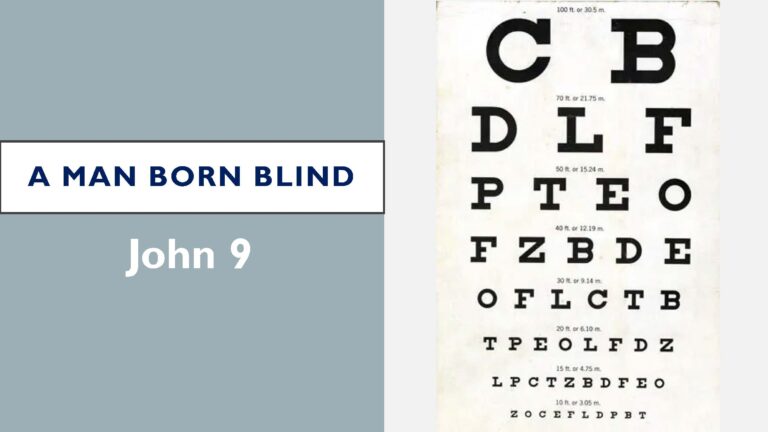
    The Man Born Blind (John 9)

    John 9:1-41

    John 9:1

    As He passed by…

    Not a random coincidence, but a planned encounter

    •⠀Matthew 2:14 (The call of Levi)

    •⠀Luke 10:31-32 (The priest and the Levite pass on the other side)

    •⠀John 4:4 “He had to pass through Samaria” (Woman at the well)

    John 9:2

    Who Sinned? (Retribution Theology)

    •⠀Job 4:7-9  Eliphaz to Job: The innocent do not suffer

    7 “Remember now, who ever perished being innocent?

    Or where were the upright destroyed?

    8 “According to what I have seen, those who plow iniquity

    And those who sow trouble harvest it.

    9 “By the breath of God they perish,

    And by the blast of His anger, they come to an end. Job 4:7-9

    Drawing conclusions from general principles / observations
    Psalm 37:25

    I have been young and now I am old,

    Yet I have not seen the righteous forsaken

    Or his descendants begging for bread.

    Using human wisdom (a logical conclusion) some might say that if someone is hungry and forsaken, it is a result of their unrighteousness.

    This is a common error seen in group Bible studies.  It is not sound exegesis to assume that the opposite of a given statement must logically be true. 

    In this case, are all those begging for bread descendants of the unrighteous? 
    Is the man born blind, the product of some unrighteousness?

    It is this type of reasoning forms the basis for the Prosperity Gospel – which relies heavily upon the blessings promised to Israel if they remained faithful to the LORD.

    Is this reasoning practiced today in evangelical circles?  The sad truth is that it does.  When AIDS became endemic, preachers preached sermons and writers wrote books on how AIDS is a judgment of God upon a segment of our society.  

    The fact is that all disease is the result of the fall of man.  While there are natural consequences of taking risks which lead to injury, illness, and death, there were babies born with the AIDS virus and blood transfusion recipients that developed AIDS that were by all standards innocent.

    Some turned away from Paul in his imprisonment, assuming it was God’s judgment.

    John 9:3

    The LORD’s Two-Fold Response

    1) This man’s blindness is not retribution for sin (see 9:2)

    Jesus answered, “It was neither that this man sinned, nor his parents; but it was so that the works of God might be displayed in him. John 9:3

    Compare Jesus’ response in Luke 13:1-4 regarding men who were slain by Pilate.

    4 Or do you suppose that those eighteen on whom the tower in Siloam fell and killed them were worse culprits than all the men who live in Jerusalem? Luke 13:4

    2) This man’s blindness is an opportunity for Jesus to display the “works of God”

    “…for the works which the Father has given Me to accomplish—the very works that I do—testify about Me, that the Father has sent Me.” John 5:36

    What are the “works of God” that Jesus refers to here?

    I know a little about losing and regaining sight from my own experience this past year. Giving the blind their sight was a sign miracle that the Lord Jesus is the Messiah.

    When John’s disciples came to Jesus, they asked, “Are You the Expected One, or shall we look for someone else?” Matthew 11:2-5

    Jesus responds with six signs of the coming Messiah.

    The first of these is giving the blind their sight.

    Jesus answered and said to them, “Go and report to John what you hear and see: the BLIND RECEIVE SIGHT!” Matthew 11:4  (also  Luke 7:22)

    John 9:4-5

    Darkness and Light (Blindness and Sight) in John

    John uses darkness and light, blindness and sight to contrast those that believe the message that Jesus is the Savior with those that reject the message.

    Matthew 4:16 records that Jesus’ ministry would fulfill the prophecy of Isaiah 9:2:

    “The people who walk in darkness

    Will see a great light;

    Those who live in a dark land,

    The light will shine on them.”

    •⠀John 1:4 “In Him was life and the Life was the Light of men.

    •⠀John 1:5, 7, 8, 9

    •⠀John 3: 19, 20, 21

    •⠀John 8:12 “I am the Light of the World”

    •⠀John 9:5  “I am the Light of the World”

    •⠀1 John 1:12 “God is Light and in Him is no darkness at all”

    •⠀1 John 2:8 “the darkness is passing away and the true light is already shining.

    •⠀1 John Walking in Light and Walking in Darkness are contrast.

    The night is coming! (His absence, His rejection)

    John 9:6-7 Jesus applies clay to the eyes of the man born blind.

    When Jesus healed …

    INTERESTING TO NOTE – THE MAN BORN BLIND DID NOT ASK FOR HEALING

    1) He spoke

    •⠀Matthew 8:8 / Luke 7:7 “Say the word and my servant will be healed”

    •⠀Matthew 9:6 “Get up, pick up your bed and go home.”

    2) He was touched

    •⠀Matthew 9:21 “If I only touch His garment, I will get well.”

    3) He touched

    •⠀A coffin (Luke 7:14)

    •⠀The hand of a girl (Mark 1:31, Luke 8:54)

    •⠀A leper (Mark 1:40-41)

    •⠀Blind eyes (Matthew 9:29)

    •⠀The ear of the High Priest’s slave (Luke 22:51)

    4) He commanded

    •⠀Stretch out your hand (Mark 3:5)

    •⠀“Get up, pick up your bed and go home.” Matthew 9:6

    •⠀“Go and show yourselves to the priests.” Luke 17:14 (10 Lepers)

    •⠀Go and wash (John 9:6)

    5) He applied saliva

    •⠀With clay to the eyes of the man born blind  (John 9:6)

    •⠀To the tongue of a man deaf and mute (Mark 7:33, 37)

    There was no recipe for healing by Christ. 

    •⠀There was no ceremony to imitate.

    •⠀There was no words to repeat.

    •⠀Every healing was unique

    John 9:8-12

    The people respond – “Where is he?”

    Contrast this with his testimony before the Pharisees in the next section.

    •⠀They recognized the change in the man born blind.

    •⠀They honestly wanted to know the details (which he provided)

    •⠀These wanted what the man born blind received!

    John 9:13-34  The Pharisees argument – “This man is not from God”

    The Pharisees declared that Jesus was a sinner, having broken the Sabbath. 

    This is their strict understanding of the Sabbath, apart from the spirit of the law.

    See Luke 14:5 (1-6) Regarding the ox or ass fallen in a pit/well.

    See John 7:22-23 Regarding circumcision on the Sabbath.

    The blind man’s first response.

    “Whether He is a sinner, I do not know; one thing I do know, that though I was blind, now I see.” (John 9:25)

    From John 9:13-34 a group of educated religious leaders are debating with a beggar that was born blind. 

    John 9:31-32  The man born blind’s second response to the Pharisees.

    We know that God does not hear sinners; but if anyone is God-fearing and does His will, He hears him.

    Since the beginning of time it has never been heard that anyone opened the eyes of a person born blind.

    Again, as in John 9:4-5, the author uses darkness and light, blindness and sight to contrast those that believe the message that Jesus is the Savior with those that reject the message.

    John 9:35-38

    When the Lord Jesus finds the man he asks, “Do you believe in the Son of Man.”  Son of Man is a title given to Messiah.

    The man declares his faith with the words:

    “Lord, I believe.”

    John 9:39-41

    The blindness of the Pharisees

    The Pharisees in John 9 were blinded by religion.

    Wouldn’t you think that being able to read the words of Moses, the Prophets, and the Psalms in Hebrew would lead them to look for Messiah, and to recognize the sign miracles?

    It did not.

    The chapter ends with some of them asking the Lord, “We are not blind too, are we?”

    John 9:41 is a hard saying of Christ.

    •⠀If you were blind (ignorant of the revelation Christ)

                •           You would have no sin (the sin of rejecting Messiah)

    If I had not come and spoken to them, they would not have sin, but now they have no excuse for their sin. John 15:22

    but…

    •⠀Now you say we see (knowledge of the law)

                •           your sin remains (because they reject the revelation of Christ)

    (Romans 1:20)

    For since the creation of the world His invisible attributes, His eternal power and divine nature, have been clearly seen, being understood through what has been made, so that they are without excuse.

    And thus, John 9:39-41 contrasts the Pharisees with the man born blind.

    The phrase ἁμαρτίαν ἔχειν, to have sin, occurs only in John, in the Gospel and First Epistle.

    (See 1 John 1:8) If you say that you have no sin …

    The contrast between the physically blind and the spiritual blind (Israel) ends with some of the Pharisees appearing to understand their blindness. However, in general, Israel as a nation rejects Jesus as Messiah.

  • Miracles

    Miracles

    And many other signs truly did Jesus in the presence of his disciples, which are not written in this book: But these are written, that ye might believe that Jesus is the Christ, the Son of God; and that believing ye might have life through his name. (John 20:30-31)

    Views on Miracles

    The scientific worldview seeks to find a natural explanation for all phenomena. There must be an explanation for how an event occurs. This is the prevalent view of education and permeates
    every aspect of our world. Every form of secular media: Movies, children’s cartoons, public television, books, etc. tend to follow this view.

    As a child I was fascinated by dinosaurs. I see that same interest in my grandchildren. This opens the door for indoctrination in evolutionary thought. Even with materials from groups like Creation Research is not enough to balance the influence from museums, public television, etc. The scientific world view regarding creation is simply that there is a natural explanation. This view entered theology as the Gap Theory.

    The Gap Theory (or Ruin-Reconstruction Theory) proposes a vast time gap between Genesis 1:1 (“In the beginning God created…”) and Genesis 1:2 (“Now the earth was formless and void”), suggesting God created an initial world with prehistoric life, which was destroyed by a cataclysm (often linked to Satan’s fall) before God re-created Earth in the six literal days described in Genesis. This theory attempts to reconcile the Bible’s creation account with
    scientific evidence for an old Earth by placing the geological ages and fossils within this gap. (AIG, 2025) This is a component of theistic evolution that denies a literal seven-day creation, understanding a day as period of time or epoch. Some form of that view is held by about half of Christians in America and a larger number in European nations. (Wilson, 2010)

    In his book, The Miracles Answer Book, Lee Stobel quotes results from Barna Research regarding the belief in miracles. Only half of Americans surveyed believed that the miracles in
    the Bible occurred as they are described. That number drops to 40% for millennials. “The biggest reasons turned out to be a lack of belief in the supernatural (44 percent) and the contention that modern science has ruled out the possibility of miracles” (Strobel, 2019)

    Thomas Jefferson, a founding father of the United States, was a deist, not a Christian. He
    worked for over twenty years creating a book that is often called the Jefferson Bible, though he
    never called his work by that name.

    The Life and Morals of Jesus of Nazareth was completed in 1820 by cutting and pasting, with a
    razor and glue, numerous sections from the New Testament as extractions of the doctrine of
    Jesus. Jefferson’s condensed composition excludes all miracles by Jesus and most mentions of the supernatural, including sections of the four gospels that contain the Resurrection and most
    other miracles, and passages that portray Jesus as divine. (Various, 2025)

    If you are reading this and struggle with believing the miracles of the Bible, you are not alone.
    The primary goal of this series to help you understand the purpose of miracles in the Bible.
    Perhaps through this study you will begin to doubt your doubts.

    Signs, Miracles, & Wonders

    Peter, in his sermon on Pentecost, preaches concerning Christ, “Ye men of Israel, hear these words; Jesus of Nazareth, a man approved of God among you by miracles and wonders and signs, which God did by him in the midst of you, as ye yourselves also know:” Acts 2:22.

    These three words are used interchangeably but are not synonyms. Rather, they often look at the same event from different views. Miracles and Wonders refer to the nature or appearance of the event, while Signs refers to their purpose.

    Early writers Augustine and Aquinas offered some of the early attempts to define a miracle. It is not as simple as it seems. You might be surprised at the criteria for declaring something to be a miracle according to these and other more recent versions of their definitions.

    The word δύναμις is the term usually used for miracles. It indicates a work or deed that is the result of power, ability, or strength – usually of God or granted by God.

    Miracles then are a “supernatural intervention” with results that are typically unlikely or even impossible. Unbelievers often attribute the unlikely results as “coincidence”.

    After a teacher attempted to explain away a miraculous answer to prayer, a student responded, “All I know is that coincidences happen more often when we pray.”

    Unable to explain away the impossible, they are simply denied.

    The word teras is used 15 times in the New Testament and always translated “wonders.”  Only once does it appear alone, in Acts 2:19 quoting the prophet Joel.  Every other occurrence is included with signs and/or miracles.  A wonder is an event that cannot be explained by natural causes.

    This is another way of saying “a miracle”.

    Signs refer to the purpose of the miracle.  The phrase “signs and wonders” appears twenty-nine times in the New Testament and thirty times in the Old Testament.  It is possible that many of these could be understood as a hendiadys (one by two), that is two words used in conjunction to describe a single thing, event, or attribute. (Bullinger, 1979)

    Another example of a hendiadys is from Solomon’s building of the Temple, “even to prepare me timber in abundance; for the house that I am about to build will be great and wonderful.” 2 Chronicles 2:9   The sense is, “wonderfully great,” or “great, yes — and wonderfully great too.”

    This is a common Hebrew idiom also found in the New Testament.  So then, signs and wonders together may be understood as “signs that are also miracles,” or “miraculous signs.”  Whether together or separate, the impact of these words is the same.

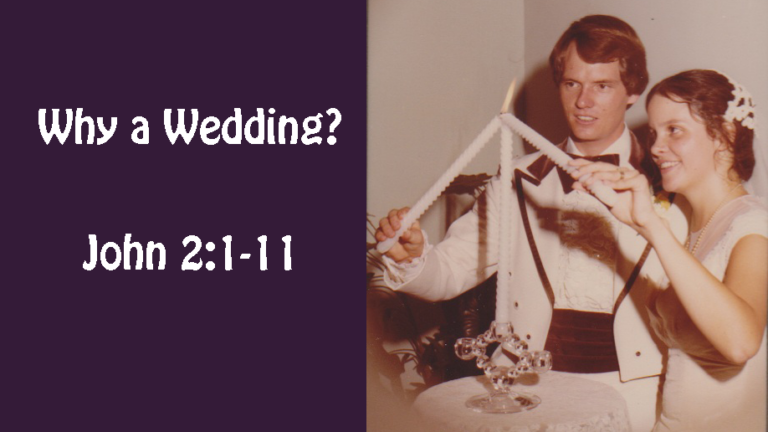
    The first miracle of Christ was at the wedding at Cana. (John 2:1-12)

    This beginning of miracles did Jesus in Cana of Galilee, and manifested forth his glory; and his disciples believed on him. (John 2:11 KJV)

    The word translated “miracle” here is σημεῖον. The KJV translates it miracle here and thirteen other times. It is translated as “sign” over one hundred times.  The NASB translates it as “sign” in here in John 2:11 in all miracles in John.

    What does this mean?  In general, it appears that most signs are miracles, and some miracles are also signs.  From this story and the opening Scripture from the conclusion of John’s gospel, we learn the purposes for sign miracles.

    • Signs and miracles confirm a person is sent by God.
    • Signs and miracles confirm the authority of a person sent by God
    • Signs and miracles confirm the message of one who is sent from God

    There are two separate times that Jesus healed the man brought to him on a bed carried by his friends. In Matthew, it was at the seaside near Nazareth (Matthew 9:1-8), In both Mark 2:10 and Luke 5:24 it was at Capernaum, where they lowered their friend through the roof.  In each recorded of these events, Jesus says, “Your sins are forgiven you.” Each time, his authority to forgive sins is questioned.  Each time, he replies, “Is it easier to say to the sick of the palsy, Thy sins be forgiven thee; or to say, Arise, and take up thy bed, and walk?” followed by “But that ye may know that the Son of man hath power on earth to forgive sins… I say unto thee, Arise, and take up thy bed, and go thy way into thine house.”

    The sign or miracle authenticates the message “your sins are forgiven” and the messenger “The Son of man has authority to forgive sins.”

    In the Old Testament, God used signs and miracles (the Ten Plagues) to authenticate Moses as His messenger, and the words of Moses as coming from God.

    This is precisely the meaning described in the opening Scripture concerning the miracles of the Lord Jesus.

    “And many other signs truly did Jesus in the presence of his disciples, which are not written in this book: But these are written, that ye might believe that Jesus is the Christ, the Son of God; and that believing ye might have life through his name.” (John 20:30-31)

    In trying to account for the same miracle appearing in more than one of the gospels, there are at least thirty-seven miracles of the Lord Jesus recorded.  Herbert Lockyear wrote the book “All the Miracles of the Bible.” It is certainly an interesting study, but broader than our time together allows.

    In the will of the Lord, we will look at six categories of miracles. 

    When John the Baptist was placed in prison, he sent two of his disciples to Jesus. They asked Jesus, “Are You the Expected One, or do we look for someone else?” (Luke 7:20)  Jesus responded with the command, “Go tell John what you have seen and heard.”  (Luke 7:22 / Matthew 11:5)

    Jesus lists six signs that He is the Messiah that John waited for. Both Matthew and Luke provide the same list in the same order. 

    1) Miracle of Sight

    2) Miracle of Walking Lame

    3) Miracle of Cleansed Lepers

    4) Miracle of the Deaf Hearing

    5) Miracle of Dead Living

    6) Sign of Gospel Preaching (to the poor).

    Not listed are many other signs.

    • Power over creation!
      • Found in all three synoptic gospels.
      • “Even the wind and seas obey Him” (Matthew 8:27; Mark 4:41; Luke 8:25)
      • John 1:1 – He spoke the world into being.
    • Power over forces of evil.
      • Cast out demons (not simply healing the sick)
      • The Temptation

    WORKS CITED

    AIG. (2025, 12 27). Gap Theory. Retrieved from Answers In Genesis: https://answersingenesis.org/genesis/gap-theory/

    Bullinger, E. (1979). Figures of Speech Used in the Bible. Grand Rapids: Baker [Originally published by Eyre and Spottiswoode: London, 1898), 657-73.].

    Lewis, C. (2009). Miracles: A Preliminary Study Digital Version. HarperCollins e-books.

    Lockyer, H. (1988). All the Miracles of the Bible. Grand Rapids, MI: Zondervan.

    Strobel, L. a. (2019). The Miracles Answer Book. Zondervan. Retrieved from Thinke.org: https://thinke.org/blog/how-common-are-miracles-lee-strobel-amp-mark-mittelberg

    Tenney, M. C. (1975). Zondervan Encyclopedia of the Bible. Grand Rapids, MI: Zondervan.

    Various. (2025). The Jefferson Bible. Retrieved from Wikipedia: https://en.wikipedia.org/wiki/Jefferson_Bible

    Wilson, D. (2010). European Christians are at the forefront in accepting evolution: results from and iternet-based study. Evolutionary Development, 537-540.

    DOWNLOADS

    Miracles Presentation (pdf)

    Miracles Notes (pdf)